Interview by Sumitra
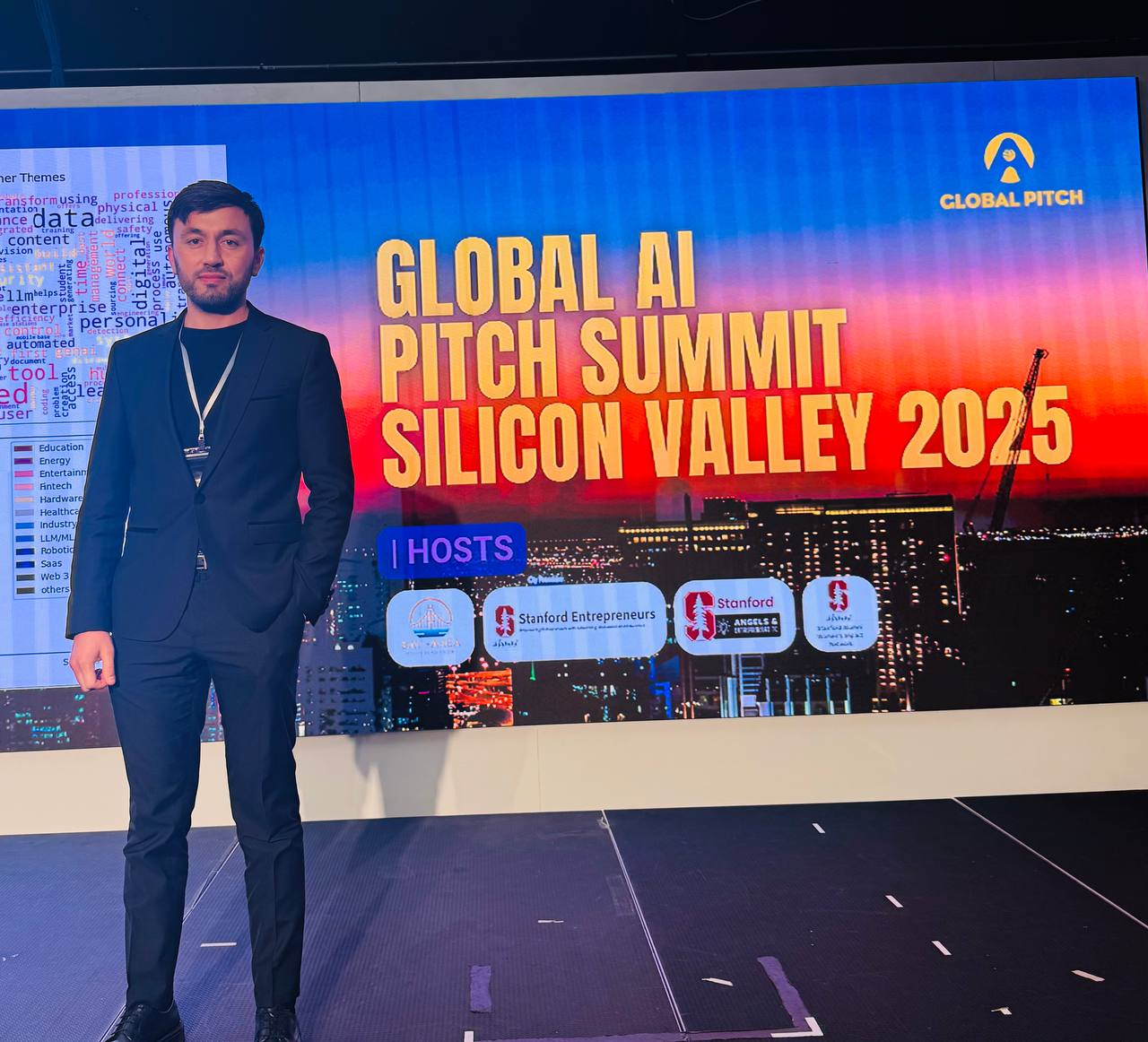
It was at a recent Silicon Valley residency program event, organized by Silkroad Innovation Hub in collaboration with AlchemistX, that we met Abbos Mamatkulov, a researcher working at the intersection of tourism, international business, and emerging technologies.
The program, which brings together promising talent from Central Asia and connects them with global innovation ecosystems, served as a platform for exchange between entrepreneurs, researchers, and industry professionals. Among the participants, Mamatkulov stood out for his focus on applying artificial intelligence to real-world tourism challenges.
In this interview, he shares insights into his background, his research, and how technology could shape the recovery of global tourism, particularly in cities like San Francisco.
Q: Can you tell us about your background and what brought you to Silicon Valley?
Abbos Mamatkulov:
My academic background is in tourism and business administration, and over time I became interested in how tourism systems evolve under the influence of digital transformation and global economic trends.
Participating in the Silicon Valley residency program has been an important experience. It provides exposure to a highly dynamic environment where innovation is actively developed and applied. Programs organized by Silkroad Innovation Hub and AlchemistX are particularly valuable because they create opportunities for international collaboration and knowledge exchange.
For me, being here has reinforced the importance of connecting research with practical innovation.
Q: Your work focuses on artificial intelligence in tourism. What are you currently researching?
Abbos Mamatkulov:
My current work focuses on the application of artificial intelligence in tourism systems, particularly in urban destinations such as San Francisco.
The objective is to explore how data-driven models can support more efficient destination management. This includes improving visitor flow distribution, enhancing personalization of tourist experiences, and supporting strategic decision-making for tourism stakeholders.
Artificial intelligence allows for better analysis of traveler behavior and demand patterns, which can help cities respond more effectively to changing conditions in the tourism sector.
Q: How did the pandemic impact tourism in San Francisco?
Abbos Mamatkulov:
The impact was substantial. Prior to the pandemic, San Francisco recorded approximately 26 million visitors in 2019, making it one of the leading urban tourism destinations in the United States.
In 2020, visitor numbers dropped to roughly 12 million, representing a decline of more than 50 percent. This sharp decrease highlights how vulnerable global tourism systems are to large-scale disruptions.
Although recovery has been ongoing, the process has been gradual. Changes in traveler behavior, particularly in business travel and international tourism, continue to influence how quickly destinations return to previous levels.
Q: In what ways can artificial intelligence support tourism recovery?
Abbos Mamatkulov:
Artificial intelligence can play a significant role in improving how destinations manage uncertainty and adapt to changing demand.
For example, predictive analytics can help forecast visitor numbers and identify trends, allowing tourism authorities to plan more effectively. AI-based recommendation systems can also enhance the visitor experience by providing personalized suggestions and optimizing travel routes.
In a city like San Francisco, these tools can help distribute tourist activity more evenly, reduce pressure on popular locations, and promote a more sustainable approach to tourism development.
Q: What distinguishes your approach from other research in this area?
Abbos Mamatkulov:
One of the key aspects of my work is integrating tourism-specific knowledge with technological approaches. While many solutions focus primarily on technology, I try to ensure that they are aligned with how tourism systems actually operate.
This involves combining perspectives from tourism management, international business, and data analytics to develop frameworks that are both practical and adaptable.
The goal is to create solutions that are not only innovative but also applicable in real-world tourism environments.
Q: What role do programs like this Silicon Valley residency play in your work?
Abbos Mamatkulov:
They are very important because they provide access to an ecosystem where ideas can be tested, refined, and connected to real applications.
Being in Silicon Valley allows researchers and professionals to interact with people working on cutting-edge technologies. It also creates opportunities for collaboration across disciplines and industries.
For participants from regions like Central Asia, these programs are especially valuable because they help bridge local knowledge with global innovation.
Q: How do you see the future of tourism evolving?
Abbos Mamatkulov:
The future of tourism will likely be shaped by three key elements: digital transformation, sustainability, and data-driven decision-making.
Technology will continue to influence how destinations operate and how travelers interact with services. At the same time, there is increasing awareness of the need for sustainable tourism practices that balance economic growth with environmental responsibility.
The integration of these factors will define how tourism develops in the coming years.
Conclusion
As global tourism continues to adapt in the post-pandemic environment, professionals working at the intersection of technology and industry are becoming increasingly relevant.
Abbos Mamatkulov represents a growing group of researchers exploring how artificial intelligence and data-driven strategies can contribute to more efficient, competitive, and sustainable tourism systems.
In innovation-driven environments such as Silicon Valley, these ideas are not only theoretical they are part of a broader effort to shape the future of global industries.

Daily magazine for entrepreneurs and business owners